A Scalable, Biomass Waste-Based Textile
A Scalable, Biomass Waste-Based Textile
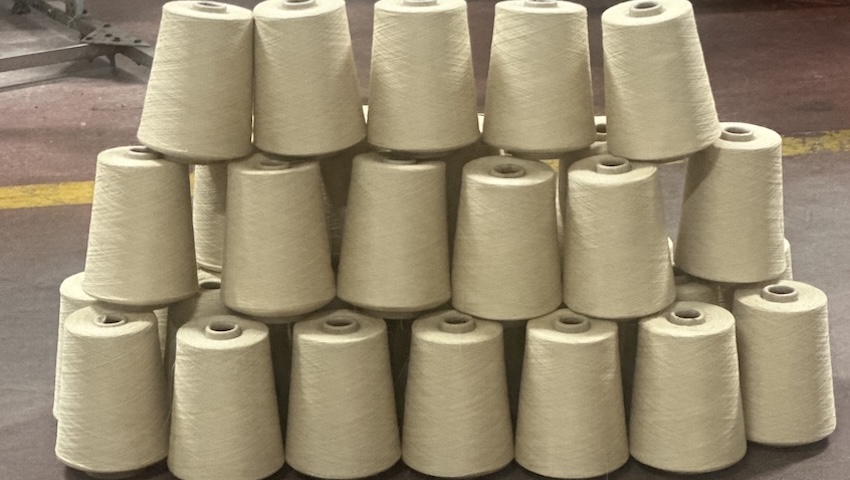
A new bioengineered fiber offers a pathway toward sustainable textile manufacturing.
Sustainable textile innovation has traditionally focused on incremental adjustments, from recycled blends to chemical-efficient dyeing and improved wastewater treatment. But engineers at the Pennsylvania State University have taken a much larger leap by developing a biofabricated textile fiber made entirely from yeast biomass, produced without farmland, petrochemicals, or livestock.
Recently published in Proceedings of the National Academy of Sciences, the team’s research uncovered a wool-like protein fiber created by transforming industrial yeast byproduct streams.
For materials engineer Melik Demirel, one of the project’s leads, the critical challenge was not inventing a new material in the lab but creating one that could move into industrial-scale manufacturing. Scaling up of manufacturing in deep tech was at the center of the work, Melik explained. Designing a material is one milestone, but designing a system that can produce it by the ton is another.
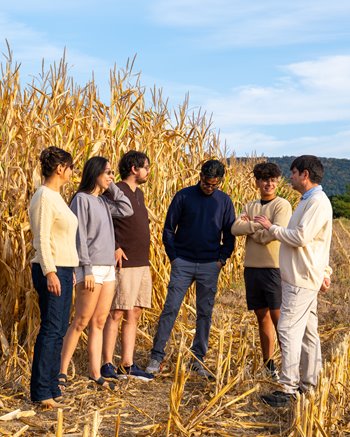 Students involved in the project showcase garments produced from biofabricated protein fibers developed from industrial yeast biomass. Image: Penn State
Instead of engineering a specialized microorganism or developing a bespoke fermentation process, the team made a strategic decision to begin with an industrial resource already produced in massive quantities: yeast biomass.
Students involved in the project showcase garments produced from biofabricated protein fibers developed from industrial yeast biomass. Image: Penn State
Instead of engineering a specialized microorganism or developing a bespoke fermentation process, the team made a strategic decision to begin with an industrial resource already produced in massive quantities: yeast biomass.
“We don’t run the fermentation,” Demirel explained. “We source the yeast from breweries or pharmaceutical companies. Then we process the yeast to produce protein pulp, which is transformed into fiber.”
Through controlled drying and alignment processes, the proteins self-assemble into a structure similar to wool’s natural arrangement of coiled proteins, which is a structural architecture that permits the material to create traditional textile performance.
To evaluate real-world behavior under wear, abrasion, bursting, and environmental exposure, the team commissioned standardized ISO analyses.
“We did ISO13938, ISO 12945, ISO 1833 tests via a third-party,” Demirel said. “The results look similar to wool.”
As the protein pulp transitions to a dried, structured fiber, its mechanical stability increases, enabling it to withstand repeated loading and abrasion comparable to natural animal fibers. While the fiber stores well under dry conditions, its biological origin introduces a moisture-sensitive failure mode.
“The protein has a shelf life of two years if it is kept under dry conditions, otherwise mold grows,” Demirel explained.
Moisture exposure does influence mechanical performance, but testing suggests the impact is relatively modest prior to biological degradation. While humidity can alter tensile strength and elasticity to some degree, those changes are not drastic under controlled conditions. This understanding helps define practical limits for storage and handling rather than imposing fundamental barriers to performance, allowing the fiber to retain wool-like behavior across typical use environments.
Relevant Reads: Gelatin Fibers for Recyclable Textiles
Many biofabricated materials struggle to scale because fermentation capacity is limited or because the microorganisms require carefully engineered environments. This research avoids those hurdles entirely. Understanding this sensitivity assists with defining storage, warehousing, and transportation requirements for future industrial adoption.
“Biomass fermentation capacity of the U.S from pharma, food and breweries are around 1 megaton annually, which is more than enough to cover the world use of wool,” he said.
Rather than building new fermentation infrastructure, the team focused on converting existing biomass into fiber using manufacturing systems compatible with today’s textile industry. That compatibility is intentional: The material can be processed using equipment similar to what is used for lyocell, a cellulose-based fiber. Since the material enters the supply chain at the fiber stage, it integrates directly with spinning, weaving, knitting, and coating lines without requiring new machinery or reconfigured production floors.
One of the primary constraints on scaling today lies in fiber spinning speed. Unlike synthetic polymers such as polyester, which can be melt-spun at high throughput, biological proteins do not melt in their native form. As a result, the team relies on solution spinning, which currently operates at roughly 30 meters per minute—approximately 100 to 200 times slower than conventional melt-spinning processes.
 A finished garment made from biofabricated yeast protein fiber highlights the material’s potential for conventional apparel applications. Image: Penn State
Increasing that speed without degrading the protein structure remains an active area of research as the team explores new pathways to improve throughput while maintaining fiber integrity. The researchers have run the fiber through standard equipment to show that manufacturability was a priority from the start.
A finished garment made from biofabricated yeast protein fiber highlights the material’s potential for conventional apparel applications. Image: Penn State
Increasing that speed without degrading the protein structure remains an active area of research as the team explores new pathways to improve throughput while maintaining fiber integrity. The researchers have run the fiber through standard equipment to show that manufacturability was a priority from the start.
Fiber manufacturing follows a conventional lyocell-style process, which is already well established and optimized at an industrial scale. The more sensitive engineering challenge emerges during yarn formation, which is a process where fiber alignment and consistency are tuned through careful selection of spin finish. Instead of requiring new sensing technologies, quality control at this stage relies on adjusting surface chemistry to ensure uniform behavior across batches as fibers move into spinning and weaving.
Discover the Benefits of ASME Membership
During industrial spinning and weaving trials, friction and shear behavior reinforced the importance of spin-finish optimization, with minor adjustments proving essential to preventing fiber breakage and ensuring compatibility with existing equipment settings.
Since yeast is not grown specifically for textile production, this process avoids energy-intensive petrochemical steps, resulting in a significantly lower emissions profile. Converting yeast to protein pulp also bypasses many chemical-heavy processes traditionally associated with textiles.
Lifecycle analysis identified drying as the most energy-intensive stage of production. Removing moisture from the protein pulp represents the dominant energy hotspot as the process scales. The researchers are evaluating mitigation strategies that include combining solar and other renewable energy sources into drying operations, which is an approach that could significantly reduce energy demand without altering downstream manufacturing steps.
Demirel added, “With 500 kilograms of successful production already demonstrated, the team is now targeting pilot-scale expansion at 5 tons. But scaling up to 10,000 tons will be necessary for scaling to continue, which will cost $100 million in CAPEX.”
Aida M. Toro is a lifestyle writer from New York City.
Recently published in Proceedings of the National Academy of Sciences, the team’s research uncovered a wool-like protein fiber created by transforming industrial yeast byproduct streams.
For materials engineer Melik Demirel, one of the project’s leads, the critical challenge was not inventing a new material in the lab but creating one that could move into industrial-scale manufacturing. Scaling up of manufacturing in deep tech was at the center of the work, Melik explained. Designing a material is one milestone, but designing a system that can produce it by the ton is another.
Students involved in the project showcase garments produced from biofabricated protein fibers developed from industrial yeast biomass. Image: Penn State
“We don’t run the fermentation,” Demirel explained. “We source the yeast from breweries or pharmaceutical companies. Then we process the yeast to produce protein pulp, which is transformed into fiber.”
Through controlled drying and alignment processes, the proteins self-assemble into a structure similar to wool’s natural arrangement of coiled proteins, which is a structural architecture that permits the material to create traditional textile performance.
To evaluate real-world behavior under wear, abrasion, bursting, and environmental exposure, the team commissioned standardized ISO analyses.
“We did ISO13938, ISO 12945, ISO 1833 tests via a third-party,” Demirel said. “The results look similar to wool.”
Engineering material behavior
As the protein pulp transitions to a dried, structured fiber, its mechanical stability increases, enabling it to withstand repeated loading and abrasion comparable to natural animal fibers. While the fiber stores well under dry conditions, its biological origin introduces a moisture-sensitive failure mode.
“The protein has a shelf life of two years if it is kept under dry conditions, otherwise mold grows,” Demirel explained.
Moisture exposure does influence mechanical performance, but testing suggests the impact is relatively modest prior to biological degradation. While humidity can alter tensile strength and elasticity to some degree, those changes are not drastic under controlled conditions. This understanding helps define practical limits for storage and handling rather than imposing fundamental barriers to performance, allowing the fiber to retain wool-like behavior across typical use environments.
Relevant Reads: Gelatin Fibers for Recyclable Textiles
Many biofabricated materials struggle to scale because fermentation capacity is limited or because the microorganisms require carefully engineered environments. This research avoids those hurdles entirely. Understanding this sensitivity assists with defining storage, warehousing, and transportation requirements for future industrial adoption.
“Biomass fermentation capacity of the U.S from pharma, food and breweries are around 1 megaton annually, which is more than enough to cover the world use of wool,” he said.
Scaling for industry
Rather than building new fermentation infrastructure, the team focused on converting existing biomass into fiber using manufacturing systems compatible with today’s textile industry. That compatibility is intentional: The material can be processed using equipment similar to what is used for lyocell, a cellulose-based fiber. Since the material enters the supply chain at the fiber stage, it integrates directly with spinning, weaving, knitting, and coating lines without requiring new machinery or reconfigured production floors.
One of the primary constraints on scaling today lies in fiber spinning speed. Unlike synthetic polymers such as polyester, which can be melt-spun at high throughput, biological proteins do not melt in their native form. As a result, the team relies on solution spinning, which currently operates at roughly 30 meters per minute—approximately 100 to 200 times slower than conventional melt-spinning processes.
A finished garment made from biofabricated yeast protein fiber highlights the material’s potential for conventional apparel applications. Image: Penn State
Fiber manufacturing follows a conventional lyocell-style process, which is already well established and optimized at an industrial scale. The more sensitive engineering challenge emerges during yarn formation, which is a process where fiber alignment and consistency are tuned through careful selection of spin finish. Instead of requiring new sensing technologies, quality control at this stage relies on adjusting surface chemistry to ensure uniform behavior across batches as fibers move into spinning and weaving.
Discover the Benefits of ASME Membership
During industrial spinning and weaving trials, friction and shear behavior reinforced the importance of spin-finish optimization, with minor adjustments proving essential to preventing fiber breakage and ensuring compatibility with existing equipment settings.
Since yeast is not grown specifically for textile production, this process avoids energy-intensive petrochemical steps, resulting in a significantly lower emissions profile. Converting yeast to protein pulp also bypasses many chemical-heavy processes traditionally associated with textiles.
Lifecycle analysis identified drying as the most energy-intensive stage of production. Removing moisture from the protein pulp represents the dominant energy hotspot as the process scales. The researchers are evaluating mitigation strategies that include combining solar and other renewable energy sources into drying operations, which is an approach that could significantly reduce energy demand without altering downstream manufacturing steps.
Demirel added, “With 500 kilograms of successful production already demonstrated, the team is now targeting pilot-scale expansion at 5 tons. But scaling up to 10,000 tons will be necessary for scaling to continue, which will cost $100 million in CAPEX.”
Aida M. Toro is a lifestyle writer from New York City.
A new bioengineered fiber offers a pathway toward sustainable textile manufacturing.

Lifestyle Writer from New York City
Related Content

Mar 26, 2026
Printing a Stronger Aluminum Alloy


Mar 20, 2026
Quiz: Mechanisms Behind the Music
Up to facing the music? Test your instrument knowledge with this ASME quiz.
Mar 17, 2026
An Inflatable Apple Picker

An expandable soft robot can gently pluck a piece of fruit in around 25 seconds.
Mar 12, 2026
AI in the Weeds
Machine learning and robotic precision combine to battle weeds in orchards.