Experiencing Engineering: Building Skills Beyond the Typical Classroom
Experiencing Engineering: Building Skills Beyond the Typical Classroom
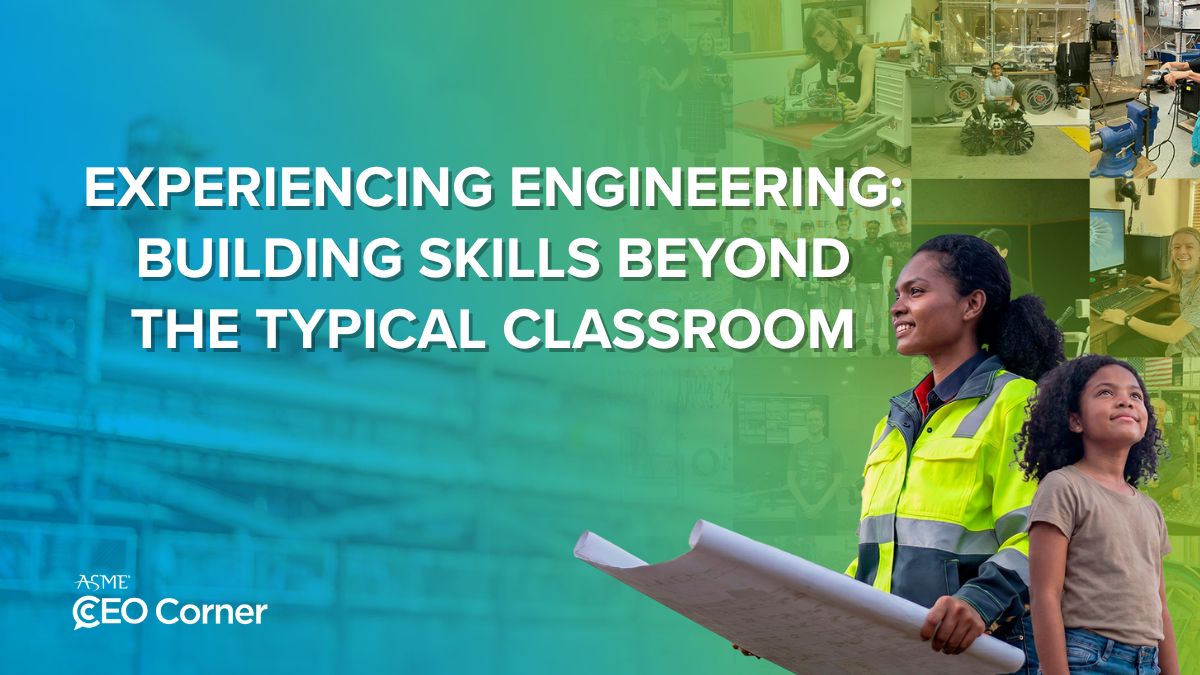
As schools recess nationwide, summer becomes a natural pause in formal learning. Yet, engineering momentum does not stop, as many young engineers use this period to pursue internships, fellowships, and apprenticeships. ASME supports the professional growth of potential, aspiring, and existing engineering talent through hands-on experiences and professional courses that build skills and accelerate career readiness.
Developing Workplace-Ready Talent
While the school year is on break, students are actively seeking new ways to learn and prepare for their futures. Summer internship opportunities in 2026 are expected to increase by about 4% year over year, and engineering roles remain highly competitive, averaging over 109 applications per posting.
Students’ increased interest in internships, fellowships, and apprenticeships is unsurprising; these opportunities offer hands-on skill development, real-world experience beyond the classroom, and direct pathways to career exploration and professional networks.
The workforce is evolving, and early experience is essential. With that in mind, ASME is dedicated to empowering engineers with the skills needed to step into and advance in their careers with confidence.
How ASME Expands Access
Through applied learning programs and initiatives, ASME supports students and early-career professionals as they establish themselves in the workforce:
- To help close the technical skills gap in the engineering workforce, the Mechanical Engineering Technology (MET) Registered Apprenticeship program trains community college graduates and links employers with emerging talent. The program’s second cohort of approximately 60 students began on June 1.
- ASME E-Fest and EFx events deliver hands-on competitions, learning, and networking for college students at localized events worldwide—from Mexico to Pakistan—engaging young engineers in a global competitive community.
- The Engineering for Change (E4C) Fellowship equips early-career engineers to tackle global and local challenges. From May to September, fellows complete training, execute impact projects, and collaborate with peers and organizations worldwide. This year’s cohort includes 40 fellows across 14 countries, selected from 473 applicants, working on 30 projects to advance sustainable development.
The ASME Foundation, ASME’s philanthropic arm, supports these programs by funding valuable opportunities for aspiring engineers to build expertise and grow their careers. Celebrating 40 years of advancing engineering, the ASME Foundation inspires, educates, and connects those committed to improving quality of life through scholarships, mentorship, and career development.
Together, these efforts extend into ASME’s broader commitment to lifelong learning, offering educational opportunities on in-demand topics that help engineers sharpen their skills with conferences, courses, and immersive experiences that translate seamlessly into real-world applications.
Learning Without Limits
ASME empowers the engineering community to build, apply, and sustain real-world skills. Through its courses and personal certification, ASME delivers accessible, relevant, practice-focused education that enables engineers to grow their careers, strengthen workforce readiness, and confidently solve complex challenges.
One example is the recently launched Piping and Pipeline Engineering Program, a structured training course that builds practical, code-based expertise for designing, constructing, and maintaining industrial piping systems and pipelines. Designed for engineers in power, oil & gas, and chemical industries, the online learning pathway offers microcredentials to validate job-ready skills.
In addition to this program, ASME members can take advantage of complimentary online courses offered this summer:
- The NQA-1 Practical Application course teaches how to implement nuclear quality assurance in nuclear facilities, with a practical focus on design control, procurement, supplier quality, testing, and measurement systems.
- An Introduction to ASME Standards & Certification covers how ASME standards are developed, maintained, and applied, and explains the Society’s role in certifying companies to ensure consistent and safe use.
- In Assessing Suitability for Robotics in Manufacturing, participants will learn how to evaluate, select, and integrate robotics into manufacturing processes to improve efficiency, accuracy, and overall performance.
Continuous Growth, Continuous Impact
Learning doesn’t slow in the summer; engineers –especially students and young professionals– are building skills year-round. ASME meets that momentum with programs that aid students as they transition into their careers and grow beyond. Wherever learning happens, ASME is there to support it.
ASME remains closely aligned with that evolution, supporting innovation as it matures, and ensuring progress is built to last.
With regards,

Tom Costabile, P. E., FASME
ASME Executive Director/CEO

P.E., FASME Executive Director/CEO
Related Content


Oct 7, 2026
Better Listening Builds Better Careers


For engineers, better listening can reveal critical information, strengthen trust, and lead to smarter decisions.
Oct 5, 2026
Where Digital Meets Physical

Mechanical engineers become indispensable as they bridge the gap between digital models and physical reality.

Oct 1, 2026
Engineering the Sounds of Silence

Many of the things that engineers create make a lot of noise. Now there’s a crop of engineers trying to turn the volume down for all of us.
Oct 1, 2026
Unlocking the Power of Wave Energy


Researchers at the University of Michigan have developed wave energy converters that may improve energy independence for remote coastal and island communities.