Exoskeleton Improves Mobility for Stroke Survivors
Exoskeleton Improves Mobility for Stroke Survivors
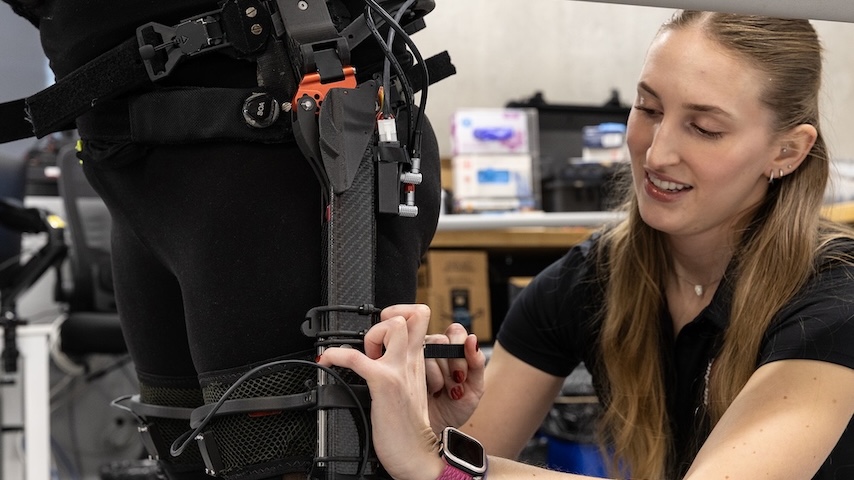
University of Utah researchers are piloting a 5.5-pound wearable robotic solution to help individuals with hemiparesis walk.
Nearly 800,000 people in the U.S. suffer strokes each year, and globally strokes are the third-highest cause of death and disability. Among survivors, nearly 80 percent suffer some form of hemiparesis, a condition affecting motor control and muscle strength on one side of the body. A new wearable and portable hip exoskeleton developed by researchers from the University of Utah aims to boost hemiparesis sufferers’ ability to walk.
The research, recently published in the journal Nature Communications, showed the exoskeleton reduced the work the hip joints had to do by nearly 30 percent, and decreased the overall metabolic cost of walking by 18 percent.
“We built this exoskeleton with the goal of working like an e-bike, but for walking,” said Tommaso Lenzi, senior author of the study and associate professor in the Department of Mechanical Engineering at the John and Marcia Price College of Engineering at the University of Utah. The research drew upon multidisciplinary resources from the College of Health and Lenzi’s HGN Lab for Bionic Engineering.
“That lack of muscle control [in hemiparesis patients] makes it harder to walk and harder to do the things you love,” said Kai Pruyn, an author of the study and a graduate student in Lenzi’s lab.
With patients coming in all sorts of shapes and sizes, the team needed to develop a prototype that could accommodate the wide variety of humans who might wear it. The research team set a goal to recruit a diverse population of individuals with hemiparesis. They reached out to Dr. Steven R. Edgely, a director within the College of Health, and a stroke survivor himself, for feedback as they developed the exoskeleton. After trying the device, he saw its potential and helped connect the researchers to patients from his clinic. The group included both males and females with a wide range of gait speeds who each tried walking with the developed exoskeleton.
The 18 percent improvement was exciting, said Pruyn, because it “had never been shown in the field before in terms of having a fully portable exoskeleton that could be used in the real world, actually improving the metabolic cost of walking and making it physiologically easier to walk.”
Lenzi added: “Once we’re applying this assistance, we’re making it much easier to walk without really changing the way that they have adapted their gait after a stroke.” He said the results suggested that each participant in the study used the exoskeleton assistance a little bit differently.
Another surprising result was that some patients showed continued improvement in their gait even after they stopped using the device. That could lead to new research directions or different applications.
“This could become a little bit like an exercise machine, where you’re putting it on every day, and it retrains you a little bit to walk,” Lenzi said.
Development challenges included making the hip exoskeleton light enough to be comfortable while providing enough torque for the boost. This requires right-sized motors, batteries, and electronic systems that comprise the actuator, since the additional weight makes your body work harder. Not easy for someone suffering from hemiparesis.
The 5.5-pound device had to allow for customization to fit users and optimize those expensive parts that make up the actuator, as the eventual goal is to bring the prototype to market. They’re integrated into a 3D printed lightweight carbon fiber frame—a system that was machined right in the composites lab. The team developed a range of six different sizes ranging from extra small to extra-large. Attached straps allow for adjustment to fit each patient.
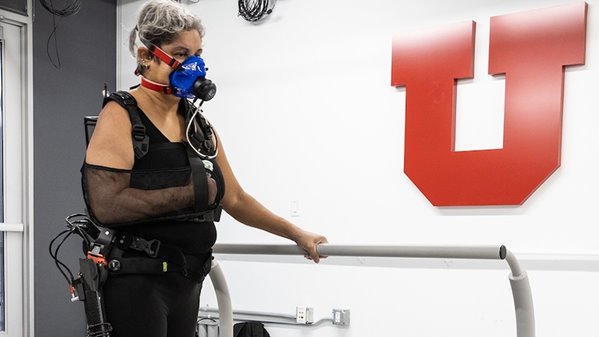 Participant Lidia walks with the device in the Lenzi Lab at the University of Utah. Photo: Dan Hixson/Price College of Engineering
“We have a little bit of an intermediate situation where the main actuator is the same, but then all the other parts are customized,” Lenzi said.
Participant Lidia walks with the device in the Lenzi Lab at the University of Utah. Photo: Dan Hixson/Price College of Engineering
“We have a little bit of an intermediate situation where the main actuator is the same, but then all the other parts are customized,” Lenzi said.
While exoskeletons are becoming more mainstream, it’s satisfying to see how the decades of work have advanced in the past 10 to 15 years, Lenzi added.
“We’ve evolved from technologies that were honestly really big and bulky and barely able to move and barely able to walk it, to see it progressing to the point that you can actually put it on a person that has movement disability. It’s really a milestone we’ve finally achieved,” he explained, crediting an interdisciplinary approach.
“We really wanted to focus on the intersection of robotics and controls and biomechanics,” Lenzi said.
Though orthotics come from the medical world and exoskeletons come from the engineering world, “the reality is that now they’re kind of becoming the same thing,” said Lenzi, adding success comes from having “a total engineering mindset,” and the ability to be “flexible in what we want to achieve.”
Pruyn, who has a bachelor’s degree in biomedical engineering and is now pursuing a doctorate in robotics and training in neuronomics, seems to be heeding the advice.
“I have the really rewarding aspect of working with clinical populations who can benefit from this technology, but I get to have a lot of fun just being in a robotics lab and watching and seeing and playing with all of the different mechanics that happen,” Pruyn said.
Nancy Kristof is a technology writer in Denver.
The research, recently published in the journal Nature Communications, showed the exoskeleton reduced the work the hip joints had to do by nearly 30 percent, and decreased the overall metabolic cost of walking by 18 percent.
“We built this exoskeleton with the goal of working like an e-bike, but for walking,” said Tommaso Lenzi, senior author of the study and associate professor in the Department of Mechanical Engineering at the John and Marcia Price College of Engineering at the University of Utah. The research drew upon multidisciplinary resources from the College of Health and Lenzi’s HGN Lab for Bionic Engineering.
“That lack of muscle control [in hemiparesis patients] makes it harder to walk and harder to do the things you love,” said Kai Pruyn, an author of the study and a graduate student in Lenzi’s lab.
Support for all
With patients coming in all sorts of shapes and sizes, the team needed to develop a prototype that could accommodate the wide variety of humans who might wear it. The research team set a goal to recruit a diverse population of individuals with hemiparesis. They reached out to Dr. Steven R. Edgely, a director within the College of Health, and a stroke survivor himself, for feedback as they developed the exoskeleton. After trying the device, he saw its potential and helped connect the researchers to patients from his clinic. The group included both males and females with a wide range of gait speeds who each tried walking with the developed exoskeleton.
The 18 percent improvement was exciting, said Pruyn, because it “had never been shown in the field before in terms of having a fully portable exoskeleton that could be used in the real world, actually improving the metabolic cost of walking and making it physiologically easier to walk.”
Lenzi added: “Once we’re applying this assistance, we’re making it much easier to walk without really changing the way that they have adapted their gait after a stroke.” He said the results suggested that each participant in the study used the exoskeleton assistance a little bit differently.
Another surprising result was that some patients showed continued improvement in their gait even after they stopped using the device. That could lead to new research directions or different applications.
“This could become a little bit like an exercise machine, where you’re putting it on every day, and it retrains you a little bit to walk,” Lenzi said.
The right combo
Development challenges included making the hip exoskeleton light enough to be comfortable while providing enough torque for the boost. This requires right-sized motors, batteries, and electronic systems that comprise the actuator, since the additional weight makes your body work harder. Not easy for someone suffering from hemiparesis.
The 5.5-pound device had to allow for customization to fit users and optimize those expensive parts that make up the actuator, as the eventual goal is to bring the prototype to market. They’re integrated into a 3D printed lightweight carbon fiber frame—a system that was machined right in the composites lab. The team developed a range of six different sizes ranging from extra small to extra-large. Attached straps allow for adjustment to fit each patient.
Participant Lidia walks with the device in the Lenzi Lab at the University of Utah. Photo: Dan Hixson/Price College of Engineering
While exoskeletons are becoming more mainstream, it’s satisfying to see how the decades of work have advanced in the past 10 to 15 years, Lenzi added.
“We’ve evolved from technologies that were honestly really big and bulky and barely able to move and barely able to walk it, to see it progressing to the point that you can actually put it on a person that has movement disability. It’s really a milestone we’ve finally achieved,” he explained, crediting an interdisciplinary approach.
“We really wanted to focus on the intersection of robotics and controls and biomechanics,” Lenzi said.
Though orthotics come from the medical world and exoskeletons come from the engineering world, “the reality is that now they’re kind of becoming the same thing,” said Lenzi, adding success comes from having “a total engineering mindset,” and the ability to be “flexible in what we want to achieve.”
Pruyn, who has a bachelor’s degree in biomedical engineering and is now pursuing a doctorate in robotics and training in neuronomics, seems to be heeding the advice.
“I have the really rewarding aspect of working with clinical populations who can benefit from this technology, but I get to have a lot of fun just being in a robotics lab and watching and seeing and playing with all of the different mechanics that happen,” Pruyn said.
Nancy Kristof is a technology writer in Denver.
University of Utah researchers are piloting a 5.5-pound wearable robotic solution to help individuals with hemiparesis walk.

Freelance writer and editor
Related Content


Oct 1, 2026
Engineering the Sounds of Silence

Many of the things that engineers create make a lot of noise. Now there’s a crop of engineers trying to turn the volume down for all of us.
Sep 29, 2026
An Engineering Landmark in Tractor Innovation

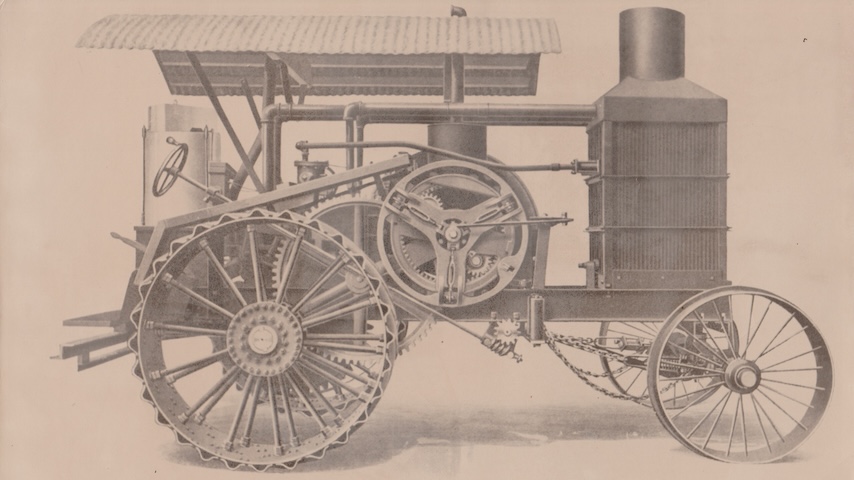
The Hart-Parr Model 3 is the first tractor to be mass produced with an internal combustion engine, earning its designation as a Historical Mechanical Engineering Landmark.
Sep 15, 2026
Octopus-Inspired Robot Gets a Better Grip


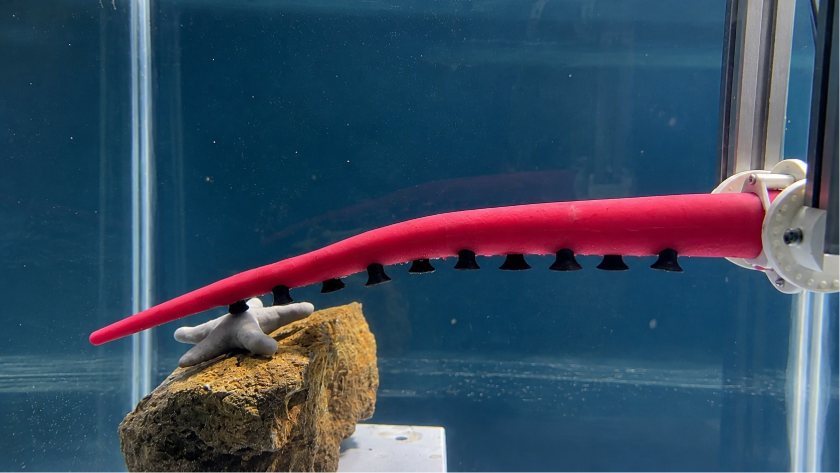
A new soft robotic arm shows how distributed sensing and control could help robots move and grasp more like living organisms.
Sep 3, 2026
5 Mechanical Innovations to Watch in 2026

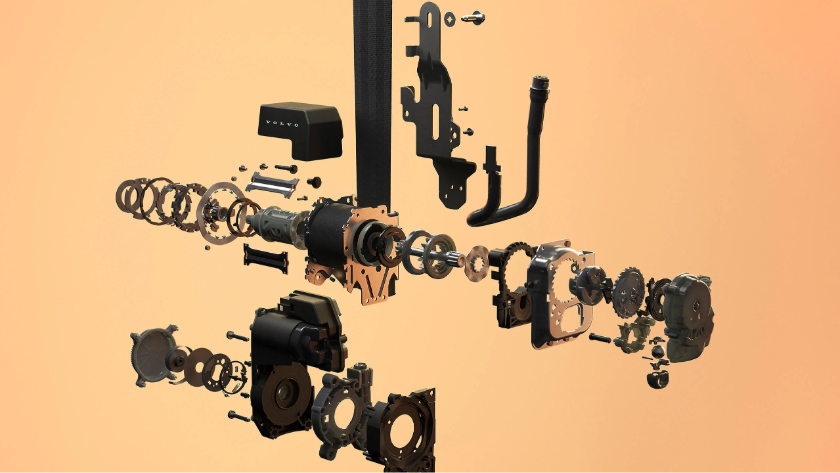
From adaptive safety belts to biomechanical drug delivery, these recent mechanical engineering breakthroughs are setting the stage for the future.