Is AI a Help or Hurdle for Engineers Looking to Get Hired?
Is AI a Help or Hurdle for Engineers Looking to Get Hired?
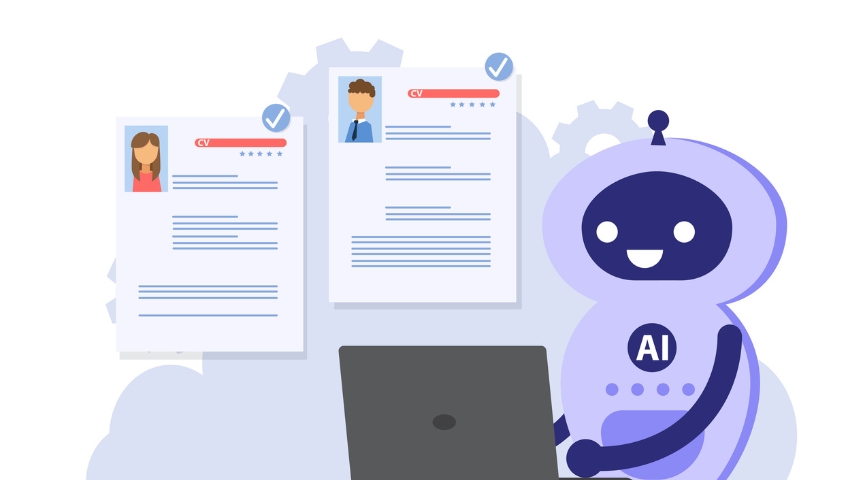
As AI tools reshape hiring, mechanical engineers need to understand how algorithms screen resumes, match skills to job descriptions, and influence who gets a closer look.
Job-seeking mechanical engineers are likely to encounter artificial intelligence (AI) along the way. But how exactly is AI being used in the hiring process?
The most common uses are at the front end of the process, according to Erik Brynjolfsson, Stanford University professor, senior fellow at Stanford’s Institute for Human-Centered Artificial Intelligence, and co-founder of Workhelix. However, AI is also being used throughout the hiring funnel.
“Employers use it to write job descriptions, source candidates, scan resumes, match skills to job requirements, summarize portfolios or work samples, and sometimes to help structure interviews or evaluate responses,” Brynjolfsson said. “For mechanical engineers specifically, I would expect AI to be most useful where the job requirements can be described in terms of concrete skills: CAD, simulation, materials, manufacturing processes, robotics, controls, thermodynamics, or experience with particular software and design environments.”
AI tools can help employers increase the efficiency of their hiring processes. They can review more candidates in less time, and they might even find people they would have otherwise missed.
In addition, AI can help identify transferable skills. “A candidate who has worked in automotive design, for example, may have capabilities that are highly relevant to robotics, aerospace, energy systems, or advanced manufacturing, even if the keywords do not line up perfectly,” Brynjolfsson said.
The most common uses are at the front end of the process, according to Erik Brynjolfsson, Stanford University professor, senior fellow at Stanford’s Institute for Human-Centered Artificial Intelligence, and co-founder of Workhelix. However, AI is also being used throughout the hiring funnel.
“Employers use it to write job descriptions, source candidates, scan resumes, match skills to job requirements, summarize portfolios or work samples, and sometimes to help structure interviews or evaluate responses,” Brynjolfsson said. “For mechanical engineers specifically, I would expect AI to be most useful where the job requirements can be described in terms of concrete skills: CAD, simulation, materials, manufacturing processes, robotics, controls, thermodynamics, or experience with particular software and design environments.”
The pros and cons of using AI
AI tools can help employers increase the efficiency of their hiring processes. They can review more candidates in less time, and they might even find people they would have otherwise missed.In addition, AI can help identify transferable skills. “A candidate who has worked in automotive design, for example, may have capabilities that are highly relevant to robotics, aerospace, energy systems, or advanced manufacturing, even if the keywords do not line up perfectly,” Brynjolfsson said.



This content is reserved exclusively for ASME Members.
Get access to these articles & other ASME Membership Benefits
✓
& much more!
✓
Technical Divisions & Sections
✓
Mechanical Engineering Magazine
✓
ASME Smart Brief
✓
ASME News
✓
Journal Discounts
✓
Free Codes & Standards Summary Books
✓
TechDesign and TechReboot Newsletters
✓
AccessEngineering
✓
ASME Conference Discounts
✓
Free Learning & Development Courses
✓
TEC Talk Webinar Series
✓
ASME Career Center
✓
Digital Article Pack or Free Quarterly E-Book Download
Access to Membership Benefits may take up to 24 hours to process.