Hypersonix Fires Up Reusable, Hydrogen Fueled Flight
Hypersonix Fires Up Reusable, Hydrogen Fueled Flight
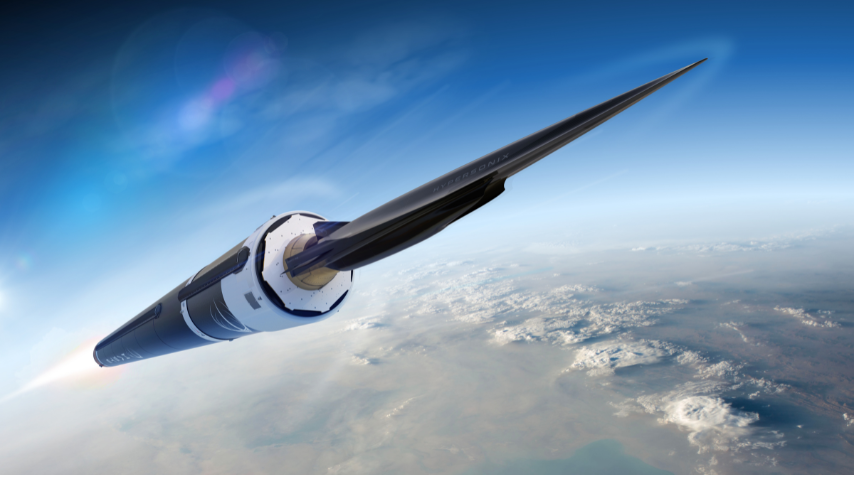
Hypersonix is advancing reusable, hydrogen-powered hypersonic aircraft designed to make access to space faster, more routine, and less costly.
Hypersonix, a hypersonic technology development company based in Queensland, Australia, is setting new expectations for performance with sustainable aerospace technology based on reusable, hydrogen-powered products.
According to Michael Smart, one of the founders of Hypersonix, the company is doing what SpaceX did before it grew into the behemoth it is today, taking a practical business approach and executing swiftly.
“A small company that knows what it’s doing can fly hypersonic aircraft that in the past took a massive government program and can do it at a fraction of the cost in a fraction of the time,” he said.
Smart, a former NASA research scientist and University of Queensland chair of hypersonic propulsion, explained the technical challenges involved in designing practical aircraft for hypersonic conditions.
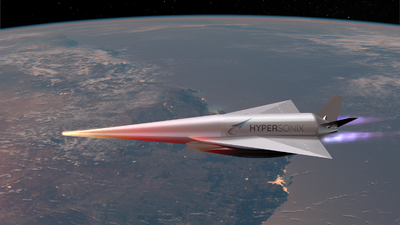 The Hypersonix VISR is a reusable, multi-mission hypersonic vehicle that can accelerate from Mach 5 to Mach 10 and return to Earth, landing on a conventional runway. Photo: Hypersonix
One of the most critical of these is managing the heat created from atmospheric friction. “It gets tremendously hot, and you have to have a way of dumping that heat through radiation,” he explained.
The Hypersonix VISR is a reusable, multi-mission hypersonic vehicle that can accelerate from Mach 5 to Mach 10 and return to Earth, landing on a conventional runway. Photo: Hypersonix
One of the most critical of these is managing the heat created from atmospheric friction. “It gets tremendously hot, and you have to have a way of dumping that heat through radiation,” he explained.
The second challenge is the propulsion system, which must burn hydrogen and cannot introduce excessive drag.
“On a regular commercial aircraft, the engine is affixed to the fuselage, but that doesn’t work at hypersonic speed,” Smart said, noting that the shockwaves would burn the engines off the vehicle. “When you’re traveling this fast, you have to have airframe integrated propulsion.” In this case, a hydrogen-fueled scramjet acts as an accelerator to achieve the velocity required to send the vehicle into space.
The third major challenge is managing boundary layer transition. The thin layer on the surface of an aircraft, called the boundary layer, enables smooth flow when the layer is laminar. “We would like to keep the boundary layer laminar to achieve smooth flow,” Smart said, “but that is not always possible.” Because the transition from laminar to turbulent flow is an important aspect of hypersonic aircraft, it is critical to know when the transition will occur.
Determining when boundary layer transition occurs has been a central focus of hypersonic aerodynamics research over the past decade. Although researchers have made progress, no definitive method exists. Universities and other institutions continue to study the phenomenon, but companies such as Hypersonix must make informed assumptions about where transition occurs and move forward with development, Smart said. Technology demonstrators make that progress possible.
One recent technology demonstrator was a hypersonic test flight mission under the U.S. Department of War’s Defense Innovation Unit (DIU), launched from Wallops Island, Va., in February 2026.
The DIU flight featured the company’s flagship DART AE, a 3.5-m autonomous hypersonic aircraft, the first in the world with an entirely 3D printed airframe. Rocket Lab’s HASTE launch vehicle carried DART AE to the planned deployment point in the upper atmosphere, where it began its mission.
 The mission was designed to collect data, so DART AE carried 140 sensors, including surface-mounted pressure sensors to measure aerodynamic loads. Scramjet performance was evaluated through pressure readings, while thermocouples throughout the vehicle captured temperature data to support future thermal structural analysis. Because DART is not reusable, the sensor data was transmitted by antenna to a land-based dish.
“This test flight proved that we can fly a hypersonic aircraft in a controlled manner,” Smart said. “What we flew is exactly what we planned.”
Satellites have traditionally been launched on massive, single-use rockets. But Hypersonix is developing technology to make launch vehicles reusable.
“This isn’t just about economics,” Smart said. “You’ve made an exquisitely beautiful and complex rocket system for a launch, and it doesn’t make sense to throw it away.”
SpaceX and Blue Origin pioneered the concept of reuse. “What we are doing is taking this to the next stage,” he said. Hypersonix uses rockets for part of the flight but intends to develop an aircraft that is fully reusable for what Smart called, “a more routine way of going to space.”
The goal is to make access to space more routine and less expensive, reducing the cost of launching the 10s of thousands of low-Earth-orbit satellites that support everyday services such as GPS and high-speed internet and must be replaced every five years or so.
Hypersonix is applying lessons from the 2026 DART launch to build additional DART vehicles, which will gather more performance data, while also developing its next vehicle, VISR (Velos Intelligence, Surveillance and Reconnaissance). VISR will be larger (5.4 m longer than the DART) and, unlike DART, will be reusable and able to land on a runway.
Instead of using Inconel, a nickel-based superalloy, Hypersonix will construct VISR using lightweight, ceramic matrix composites that can withstand temperatures to 2,000 ºC to allow it to fly at Mach 10.
Smart is optimistic about the company’s ambitious goals and is looking forward to seeing next-level results.
“We are trying to disrupt the classic aerospace industry by setting a different set of expectations for performance and speed of technology advancement,” he said.
Judy Murray is an independent writer in Houston.
According to Michael Smart, one of the founders of Hypersonix, the company is doing what SpaceX did before it grew into the behemoth it is today, taking a practical business approach and executing swiftly.
“A small company that knows what it’s doing can fly hypersonic aircraft that in the past took a massive government program and can do it at a fraction of the cost in a fraction of the time,” he said.
Overcoming technical barriers
Smart, a former NASA research scientist and University of Queensland chair of hypersonic propulsion, explained the technical challenges involved in designing practical aircraft for hypersonic conditions.
The Hypersonix VISR is a reusable, multi-mission hypersonic vehicle that can accelerate from Mach 5 to Mach 10 and return to Earth, landing on a conventional runway. Photo: Hypersonix
The second challenge is the propulsion system, which must burn hydrogen and cannot introduce excessive drag.
“On a regular commercial aircraft, the engine is affixed to the fuselage, but that doesn’t work at hypersonic speed,” Smart said, noting that the shockwaves would burn the engines off the vehicle. “When you’re traveling this fast, you have to have airframe integrated propulsion.” In this case, a hydrogen-fueled scramjet acts as an accelerator to achieve the velocity required to send the vehicle into space.
The third major challenge is managing boundary layer transition. The thin layer on the surface of an aircraft, called the boundary layer, enables smooth flow when the layer is laminar. “We would like to keep the boundary layer laminar to achieve smooth flow,” Smart said, “but that is not always possible.” Because the transition from laminar to turbulent flow is an important aspect of hypersonic aircraft, it is critical to know when the transition will occur.
Determining when boundary layer transition occurs has been a central focus of hypersonic aerodynamics research over the past decade. Although researchers have made progress, no definitive method exists. Universities and other institutions continue to study the phenomenon, but companies such as Hypersonix must make informed assumptions about where transition occurs and move forward with development, Smart said. Technology demonstrators make that progress possible.
Learning from hypersonic flight
One recent technology demonstrator was a hypersonic test flight mission under the U.S. Department of War’s Defense Innovation Unit (DIU), launched from Wallops Island, Va., in February 2026.The DIU flight featured the company’s flagship DART AE, a 3.5-m autonomous hypersonic aircraft, the first in the world with an entirely 3D printed airframe. Rocket Lab’s HASTE launch vehicle carried DART AE to the planned deployment point in the upper atmosphere, where it began its mission.
Rocket Science Redesigned
From hybrid rockets to nuclear thermal propulsion, rotation detonation engines to electric ion drives, engineers and scientists are preparing for the next generation of space travel.
“This test flight proved that we can fly a hypersonic aircraft in a controlled manner,” Smart said. “What we flew is exactly what we planned.”
Capturing value from hypersonic flight
Satellites have traditionally been launched on massive, single-use rockets. But Hypersonix is developing technology to make launch vehicles reusable.“This isn’t just about economics,” Smart said. “You’ve made an exquisitely beautiful and complex rocket system for a launch, and it doesn’t make sense to throw it away.”
SpaceX and Blue Origin pioneered the concept of reuse. “What we are doing is taking this to the next stage,” he said. Hypersonix uses rockets for part of the flight but intends to develop an aircraft that is fully reusable for what Smart called, “a more routine way of going to space.”
The goal is to make access to space more routine and less expensive, reducing the cost of launching the 10s of thousands of low-Earth-orbit satellites that support everyday services such as GPS and high-speed internet and must be replaced every five years or so.
The next step
Hypersonix is applying lessons from the 2026 DART launch to build additional DART vehicles, which will gather more performance data, while also developing its next vehicle, VISR (Velos Intelligence, Surveillance and Reconnaissance). VISR will be larger (5.4 m longer than the DART) and, unlike DART, will be reusable and able to land on a runway.Instead of using Inconel, a nickel-based superalloy, Hypersonix will construct VISR using lightweight, ceramic matrix composites that can withstand temperatures to 2,000 ºC to allow it to fly at Mach 10.
Smart is optimistic about the company’s ambitious goals and is looking forward to seeing next-level results.
“We are trying to disrupt the classic aerospace industry by setting a different set of expectations for performance and speed of technology advancement,” he said.
Judy Murray is an independent writer in Houston.


Explore ASME's commitment to sustainability, addressing climate challenges through innovation, policy, & workforce development. Get informed and involved!