Saving Lives in Seconds with Soft Robotics
Saving Lives in Seconds with Soft Robotics
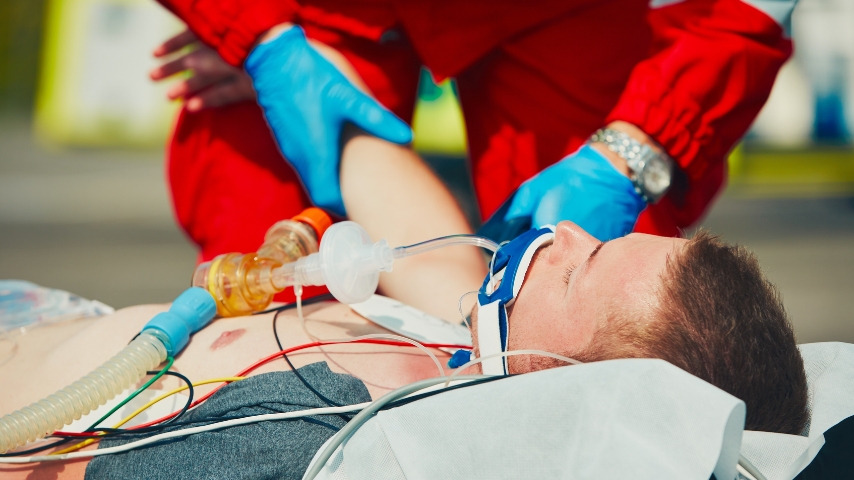
A soft robotic intubation system (SRIS) boosts emergency airway success rates, helping non-experts secure breathing tubes faster, safer, and with less trauma.
To survive a severe medical trauma, mere seconds really matter. Without a clear, open pathway to breathe easy, a patient risks brain trauma or, worse, death within minutes.
In emergency medicine, reimagining material solutions like breathing tubes not only could save more lives but also protect delicate anatomy during difficult procedures. Innovating around life-saving techniques outside the emergency room (ER) addresses a very real, urgent, and practical human need—creating better outcomes for the medical community and for patients and their families.
Researchers at the UC Santa Barbara (UCSB) Hawkes Lab set out to do just that by creating an innovative soft robotic intubation system (SRIS) to improve emergency airway management. According to recent lab results, the novel approach dramatically increases successful intubation rates compared with existing state-of-the-art ER equipment. This technological achievement is made possible by a swift, self-guided solution designed to help prehospital medical providers, such as emergency medical services (EMS) technicians and paramedics, overcome the odds.
An advanced medical procedure, endotracheal intubation involves inserting a PVC breathing tube into the trachea to manage a patient’s airway. The tube is threaded all the way down the windpipe to allow oxygen to flow while a patient is unconscious or has lost the ability to breathe (e.g., choking, allergic reactions, cardiac arrest).
Performing rapid emergency procedures like intubation on the scene is extremely difficult, usually requiring specialized expertise. In these demanding conditions, the first-pass failure rate is nearly 35 percent, according to UCSB researchers David Haggerty and Elliot Hawkes and their collaborators who published these findings in Science Translational Medicine.
Each failed attempt means more time without adequate oxygen, increased patient distress, and greater risk of injury to delicate tissues.
Current intubation technology “requires extensive training and clear anatomical visualization, making it challenging during emergencies, where first-pass failure rates are high,” reported the UCSB researchers.
Therefore, rendering life-critical intubation outside the hospital is a complex problem to solve in situations where traditional technology falls short.
“Intubation is an artisanal skill that hasn’t fundamentally changed in nearly a century,” Haggerty said in an educational webinar for EMS providers. “We believe there is a better technological approach to airway management that reduces skill, reduces failure, reduces time, and reduces trauma. Taking all of that off the table, conceivably, [this approach] could improve survivability in cases of airway emergency.”
 To address this challenge, the UCSB research team led by Haggerty designed the SRIS to autonomously guide a breathing tube into the trachea. The goal was to enable rapid, repeatable, and safe intubation without the need for extensive training, skill, anatomical knowledge, or even a clear view of the glottic opening at the point of care.
The researchers conducted a preliminary study comparing the soft robotics device with today’s “gold-standard” video laryngoscopy technology used to visualize an airway so that inserting an endotracheal tube is made easier. During initial tests using a mannequin and a cadaver, highly trained device users had a 100 percent success rate and an average intubation time of less than 8 seconds, the researchers said.
Next, testing the device after five minutes of training, prehospital medical providers intubated cadavers with an 87 percent first-pass success rate and a 96 percent overall success rate, requiring an average of 1.1 attempts and 21 seconds for successful intubation. The researchers found that SRIS performance was significantly faster than video laryngoscopy, which saw users achieve a 63 percent first-pass success rate and a 92 percent overall success rate, requiring an average of 1.6 attempts and 44 seconds for successful intubation.
One of the main challenges to successful intubation is the body itself, noted UCSB’s The Current in an article detailing the SRIS innovation—specifically, its material design.
The trachea is a rigid tube-like structure that keeps air flowing between the throat and lungs. To access this critical airway, emergency providers must move the tongue out of the way, tilt the head back and use a light source just to visualize where they are aiming the breathing tube. This is not an easy process since the epiglottis—a flap of tissue that prevents food from going into the lungs—blocks the view of the glottis, the opening to the trachea, during intubation. The provider must lift this flap while simultaneously guiding the tube through a narrow opening, all while the soft tissue in the throat relaxes/collapses in an unconscious patient.
That’s why deploying a soft robotic device is a design breakthrough. The UCSB’s design uses a bio-inspired “growing” mechanism whereby the endotracheal tube extends from its tip rather than being pushed from the base, mimicking how vines grow.
The self-guided tube inflates and grows in a controlled way as it navigates autonomously into the curved, awkward space comprising the epiglottis and trachea. The general geometry of the airway is programmed into the device. Then “it intelligently finds its way to the path of least resistance,” Haggerty explained.
Because the tube conforms to its environment as it extends, it naturally accounts for anatomical variations and reduces trauma to sensitive tissues.
The result is “no friction” and a near-zero-skill intubation approach that eliminates the need for providers to manually navigate through the body’s complex airway anatomy.
As a material and process innovation, the SRIS represents a paradigm shift from rigid, manually-controlled tools to soft robotic devices that works with the body rather than against it.
Based on the UCSB’s initial testing conclusions, “this [approach] could fill a gap in how we traverse or manage challenging or difficult airways,” Haggerty said. “Ultimately, we want to democratize airway management. With this technology, we hope to make airway management more of a product, and less of a skill that people need to develop and maintain or live without in many instances. We’d rather have people capable of effectively managing airways.”
Nancy Dunnahoe is a freelance writer in Houston.
In emergency medicine, reimagining material solutions like breathing tubes not only could save more lives but also protect delicate anatomy during difficult procedures. Innovating around life-saving techniques outside the emergency room (ER) addresses a very real, urgent, and practical human need—creating better outcomes for the medical community and for patients and their families.
Researchers at the UC Santa Barbara (UCSB) Hawkes Lab set out to do just that by creating an innovative soft robotic intubation system (SRIS) to improve emergency airway management. According to recent lab results, the novel approach dramatically increases successful intubation rates compared with existing state-of-the-art ER equipment. This technological achievement is made possible by a swift, self-guided solution designed to help prehospital medical providers, such as emergency medical services (EMS) technicians and paramedics, overcome the odds.
What is endotracheal intubation?
An advanced medical procedure, endotracheal intubation involves inserting a PVC breathing tube into the trachea to manage a patient’s airway. The tube is threaded all the way down the windpipe to allow oxygen to flow while a patient is unconscious or has lost the ability to breathe (e.g., choking, allergic reactions, cardiac arrest). Performing rapid emergency procedures like intubation on the scene is extremely difficult, usually requiring specialized expertise. In these demanding conditions, the first-pass failure rate is nearly 35 percent, according to UCSB researchers David Haggerty and Elliot Hawkes and their collaborators who published these findings in Science Translational Medicine.
Each failed attempt means more time without adequate oxygen, increased patient distress, and greater risk of injury to delicate tissues.
Current intubation technology “requires extensive training and clear anatomical visualization, making it challenging during emergencies, where first-pass failure rates are high,” reported the UCSB researchers.
Therefore, rendering life-critical intubation outside the hospital is a complex problem to solve in situations where traditional technology falls short.
Advancing medical device automation
“Intubation is an artisanal skill that hasn’t fundamentally changed in nearly a century,” Haggerty said in an educational webinar for EMS providers. “We believe there is a better technological approach to airway management that reduces skill, reduces failure, reduces time, and reduces trauma. Taking all of that off the table, conceivably, [this approach] could improve survivability in cases of airway emergency.”
Modeling Guides Challenging Pelvis Surgeries
Patient-Specific models help surgeons evaluate bone grafts and implants for safer, more effective spinopelvic reconstruction after complex cancer surgeries.
The researchers conducted a preliminary study comparing the soft robotics device with today’s “gold-standard” video laryngoscopy technology used to visualize an airway so that inserting an endotracheal tube is made easier. During initial tests using a mannequin and a cadaver, highly trained device users had a 100 percent success rate and an average intubation time of less than 8 seconds, the researchers said.
Next, testing the device after five minutes of training, prehospital medical providers intubated cadavers with an 87 percent first-pass success rate and a 96 percent overall success rate, requiring an average of 1.1 attempts and 21 seconds for successful intubation. The researchers found that SRIS performance was significantly faster than video laryngoscopy, which saw users achieve a 63 percent first-pass success rate and a 92 percent overall success rate, requiring an average of 1.6 attempts and 44 seconds for successful intubation.
How intubation system works
One of the main challenges to successful intubation is the body itself, noted UCSB’s The Current in an article detailing the SRIS innovation—specifically, its material design.The trachea is a rigid tube-like structure that keeps air flowing between the throat and lungs. To access this critical airway, emergency providers must move the tongue out of the way, tilt the head back and use a light source just to visualize where they are aiming the breathing tube. This is not an easy process since the epiglottis—a flap of tissue that prevents food from going into the lungs—blocks the view of the glottis, the opening to the trachea, during intubation. The provider must lift this flap while simultaneously guiding the tube through a narrow opening, all while the soft tissue in the throat relaxes/collapses in an unconscious patient.
That’s why deploying a soft robotic device is a design breakthrough. The UCSB’s design uses a bio-inspired “growing” mechanism whereby the endotracheal tube extends from its tip rather than being pushed from the base, mimicking how vines grow.
The self-guided tube inflates and grows in a controlled way as it navigates autonomously into the curved, awkward space comprising the epiglottis and trachea. The general geometry of the airway is programmed into the device. Then “it intelligently finds its way to the path of least resistance,” Haggerty explained.
Because the tube conforms to its environment as it extends, it naturally accounts for anatomical variations and reduces trauma to sensitive tissues.
The result is “no friction” and a near-zero-skill intubation approach that eliminates the need for providers to manually navigate through the body’s complex airway anatomy.
A new pathway
As a material and process innovation, the SRIS represents a paradigm shift from rigid, manually-controlled tools to soft robotic devices that works with the body rather than against it. Based on the UCSB’s initial testing conclusions, “this [approach] could fill a gap in how we traverse or manage challenging or difficult airways,” Haggerty said. “Ultimately, we want to democratize airway management. With this technology, we hope to make airway management more of a product, and less of a skill that people need to develop and maintain or live without in many instances. We’d rather have people capable of effectively managing airways.”
Nancy Dunnahoe is a freelance writer in Houston.


The use of robotics in industrial settings continues to accelerate at a rapid pace. Explore this collection to learn more about automation, cobots, AI-enabled robots, customized robots, and drones.